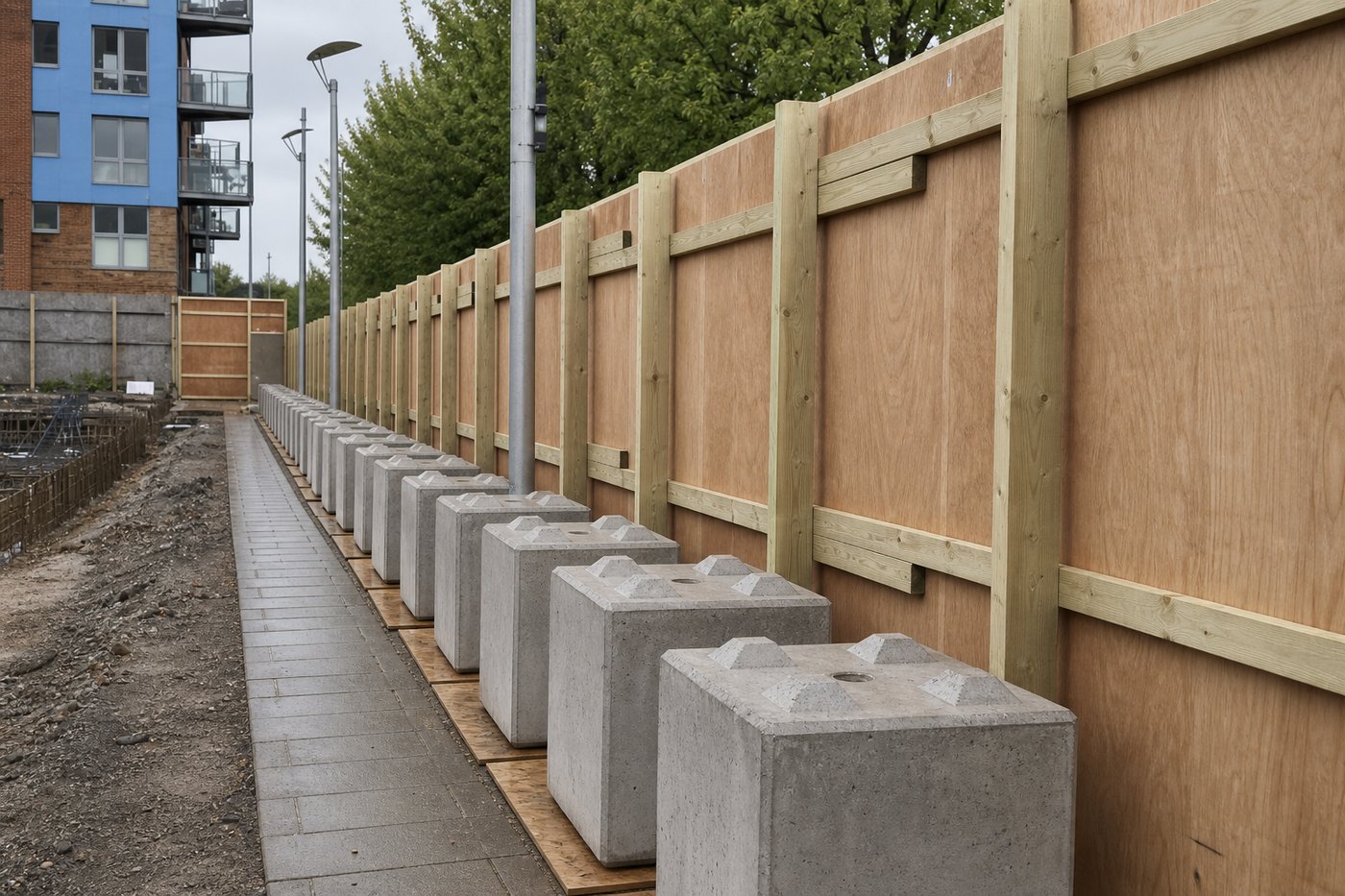
Hoarding

Construction Hoarding Inspection

Independent inspections of construction hoarding, gates, supports and site changes, with clear photographic reports and priority actions.

Public-facing temporary works that need ongoing checks

Construction hoarding is exposed to public interfaces, wind, vehicle movement, ground disturbance, repeated access and ongoing site change. Even where a suitable design was originally provided, its condition and support arrangements can deteriorate or be altered during the project.

Our inspections provide a structured review of the visible hoarding condition, available design information, supports, foundations, gates, sheeting and changes affecting stability or public protection.

Construction site hoarding and access gates

Inspection process

How Our Hoarding Inspection Works

A structured inspection process to review hoarding condition, supports and site changes, then provide clear photographic reporting and priority actions.

Available drawings, design assumptions and inspection requirements

Line, level, visible movement and local deformation

Posts, rails, panels, joints, fixings and connections

Foundations, anchors, kentledge, braces and support blocks

Gates, hinges, stops, locks and open-gate conditions

Sheeting, banners, debris mesh and changes to wind exposure

Excavation, undermining, washout or altered ground levels

Vehicle impact, damage, corrosion, deterioration or missing components

Public interface, openings, sharp edges and access control

Inspection records, maintenance arrangements and action close-out

Frequently asked questions

What does a hoarding inspection include?

Reviews typically cover available drawings and assumptions, line and level, posts, panels, fixings, foundations or kentledge, gates, sheeting, ground changes, damage and public-interface risks, together with inspection records and action close-out.

How often should hoarding be inspected?

Frequency depends on exposure, design requirements, public interface and site activity. Many projects use a recurring programme after installation, following weather or impact events, and at defined intervals during occupation.

What do we receive after a hoarding inspection?

A photographic report, location-based schedule of findings, immediate escalation of urgent concerns, prioritised repair and maintenance actions, and identification of missing or unsuitable design information where relevant.

Can you reinspect after repairs?

Yes. Optional reinspection after corrective works can be included, and design or design-checking support can be arranged separately where the existing information is incomplete or unsuitable.

What information is needed before the visit?

Site address, hoarding extent, available drawings or design notes, recent photographs if available, and any known damage, gate issues or ground changes. Preferred inspection date and access arrangements help confirm availability.

Arrange a Hoarding Inspection

Send the site address, approximate hoarding length, available drawings, photographs and preferred inspection date. We will confirm the scope, access requirements and fee.

View the site-team hoarding checklist, or contact us to arrange an inspection.

Discuss your requirements

Provide your project or company details, required service, preferred date and any available information. We will confirm the appropriate scope, information required and fee.

Quick enquiry types